
Confident Communicators at Motueka Kindergarten
Sara Murray is another dedicated volunteer with Oracy Aotearoa – offering invaluable one‑to‑one oracy support at Motueka Kindergarten. Like Clare Holmes at Victory (who we highlighted in our July e-news), she began her journey in 2024 as part of the HPP pilot — and she’s continued ever since, driven by her love of spending time with tamariki and by the clear, measurable impact she sees every week.
Sara brings a remarkable depth of experience. A qualified Early Childhood Educator with an Educational Doctorate, she was a headteacher in Christchurch before relocating to Tasman following the earthquakes. She took up a role as a senior teacher with the Nelson Tasman Kindergarten Association, overseeing centres across Motueka, Tapawera, Murchison and Takaka, and when she retired in 2021, stayed connected as a beloved storygran. Stepping in as a volunteer with the HPP pilot volunteer role in 2024, today she still spends three mornings a week at the centre — one as storygran, and two running her 1:1 oracy sessions.
What Sara sees in the sessions
Sara describes the growth she witnesses as both profound and joyful: “Increased confidence is a huge thing. For the tamariki to be able to talk with an adult one‑to‑one — it’s amazing seeing that developing.”
Working with bilingual and trilingual children has been especially rewarding. She loves watching their language acquisition unfold — “nouns and then verbs and then whole sentences” — and seeing their pride as they master new skills.
She also highlights the delight tamariki feel when things click: “We do a syllable game and seeing them ‘get it’ and be able to hear the syllables and recognise rhymes is so great. They are so delighted with themselves!”
Sara uses a weighted cat named Dino during sessions for children who want it — a calming tool that helps reduce anxiety and support focus.
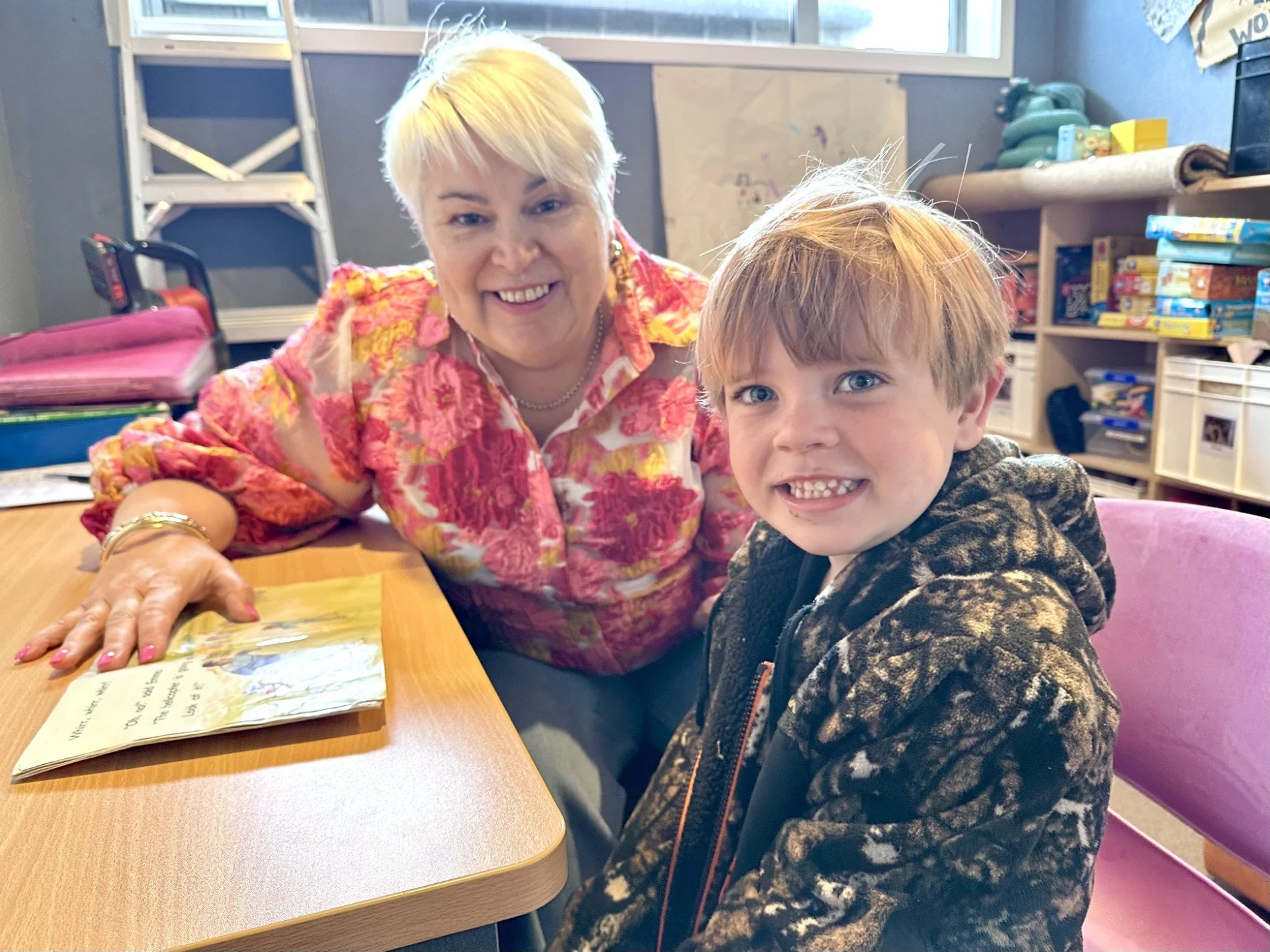
Sara with Elliott, enjoying a 1:1 oracy session
Finding their voice
Sara has a special way of connecting with children who are naturally quiet or shy. Teachers often report that after spending time with her, these tamariki become more engaged with peers and begin to “find their voice.”
She explains that cultural norms can play a role in quietness, especially for children from other countries, and she’s seen beautiful development as they grow more confident and expressive.
The sessions also create space for children to talk about worries. One memorable example involved a boy anxious about starting school:
“He was worried about older kids being mean to him. We talked about what he might do, and agreed on a tactic — he should tell the teacher.”
These moments show how oracy sessions support not just language, but emotional expression, problem‑solving, and trust.
Sara’s passion has spread well beyond her own sessions. She has introduced the importance of oracy to two other kindergartens in Motueka, training other volunteers to carry out the work.
The impact throughout the centre
Joeline Jones, Motueka Kindergarten’s head teacher and affectionately known as JoJo, says the biggest change they see from tamariki attending Sara’s sessions is a growth of confidence:
“They are learning personal greetings, face‑to‑face interaction — things that used to be normal in everyday life, but as we know life is so different now with screens and the digital world being seen as normal.”
She sees the impact across the whole centre. Children engage more with peers, hold conversations with confidence, and ESL learners show dramatic improvements in everyday communication.
Motueka Kindergarten has fully embraced oracy — all teachers have been trained in the methods, and they’ve even presented at conference on what the work has meant for them.