Forging connections with kōrero in the North Island: Oracy Aotearoa’s 2025 Road Trip
In September 2025, Oracy Aotearoa board members Mary Ellen and Karena set off on a ten‑day kanohi ki te kanohi road trip through the North Island. Their purpose was simple but deeply aligned with our kaupapa: meet the people who support tamariki and whānau every day, listen to their realities, share our oracy message, and explore how we can work together to build stronger communicators across Aotearoa.
What they found was a network of communities under pressure — and a remarkable openness to the idea that oracy can be a powerful lever for change.
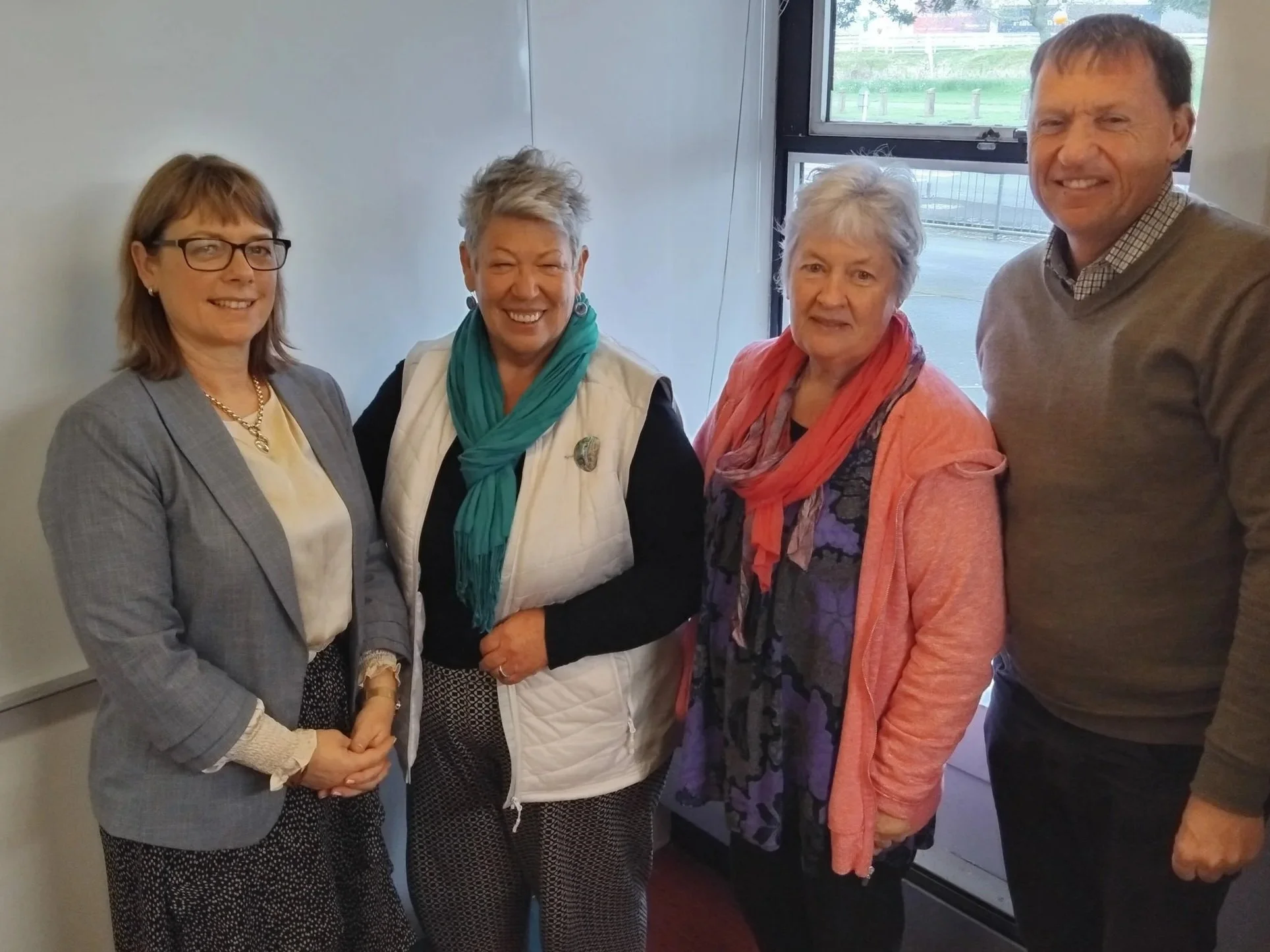
Āko Mai team members Gaylene, Jenni and Wade with Karena (second left)
Taranaki: Early Momentum and New Openings
The journey began in Taranaki with the RTLB team behind the Āko Mai programme. Although their focus differs from the HPP method that we know, they immediately saw potential for alignment, especially with our Talking Hands method.
A visit to Tu Tama Wahine revealed something we see often: social service workers who intuitively understand the consequences of poor oral language, but who have rarely had oracy framed as a fundamental need. Karena stated: “They loved our resources and were clearly impressed by our oracy message.” Their enthusiasm — and their request for further training — affirmed that our message resonates well beyond education settings.
Eastern Bay of Plenty: Intergenerational Realities, Intergenerational Hope
In Ōpōtiki, school principal Tony Howe shared sobering statistics about the number of children with fathers in prison — a stark reminder of the link between communication challenges and life outcomes. Teachers spoke candidly about the long-term impacts of language loss, both te reo and English, across generations. One kaiako reflected on her own struggles raising children without strong oracy models, and her determination to do better for her mokopuna.
In Tāneatua, sisters Vicky and Moana run a bilingual ECE where 80% of children come from gang‑involved families. Their commitment to their community is extraordinary. They embraced the Ten Tips immediately and asked for more resources in te reo — a request we are now prioritising.
Kawerau brought more rich encounters, from a leanly resourced ECE to the Teen Parent Unit, where staff recognised the Ten Tips as both a professional tool and a personal one. Many reflected on how differently they might have parented had they known more about oracy earlier in life.
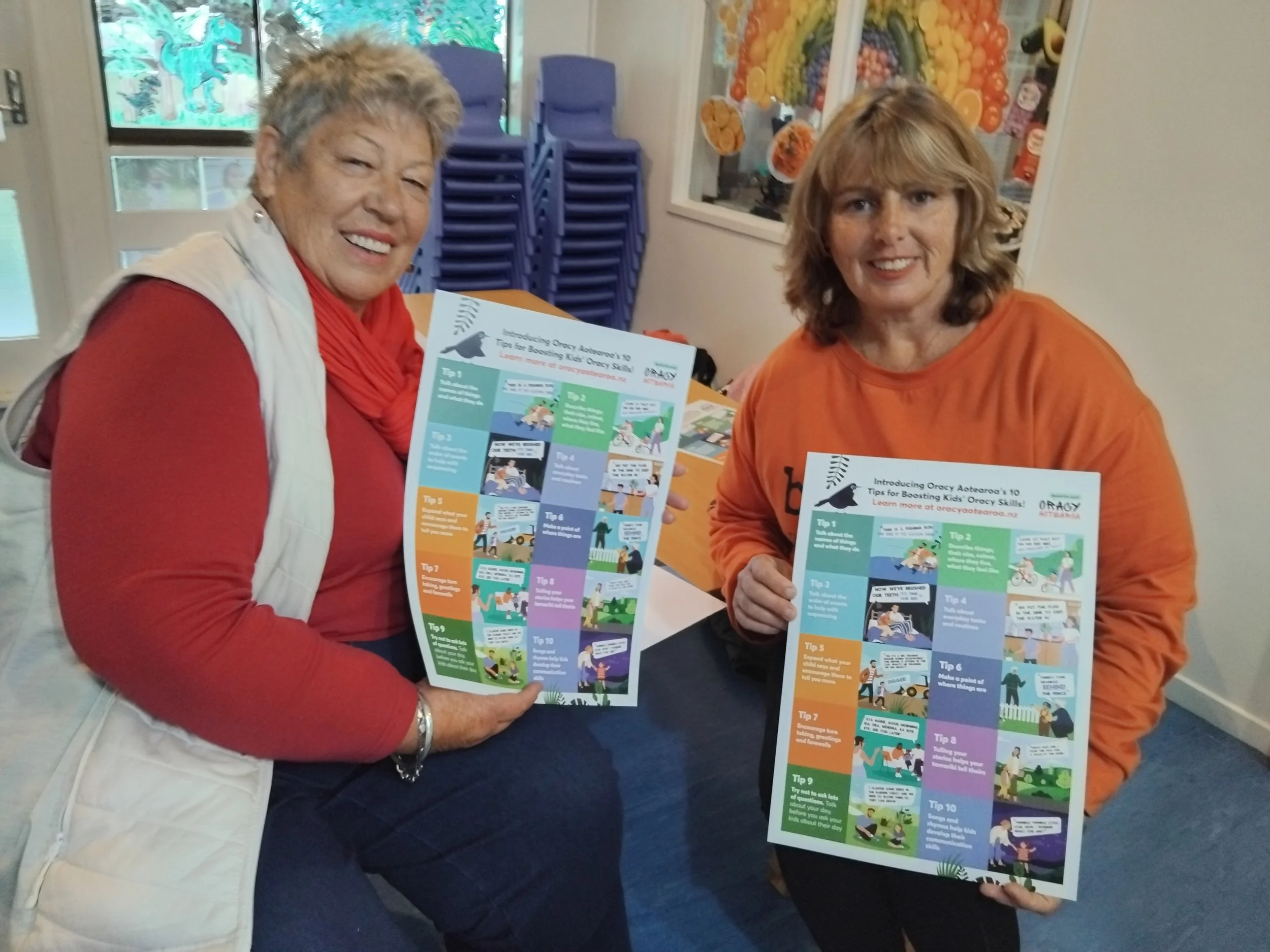
Karena with Kawerau Te Manaaki ECE Manager Felicity Miller
Rotorua: New Connections Through Serendipity
Rotorua offered a mix of planned and spontaneous encounters. While the meeting at Western Heights Primary was brief, cold‑calling led to a promising connection with Tipu Ora, part of Manaaki Ora. Their team “got” the message immediately, and a follow‑up kōrero is already in motion.
Tokoroa: A Powerful Final Day
The final day in Tokoroa was one of the most impactful. At the Women’s Refuge, child advocates from across the region gathered to share their experiences of working with oracy‑challenged rangatahi. Their insights were raw, practical, and deeply aligned with our mission. One advocate suggested embedding oracy into their safety practices — a powerful idea that could influence how vulnerable young people are supported.
Further meetings with Raukawa Services Trust and SWPICS reinforced the appetite for simple, culturally adaptable tools. The te reo posters and fridge magnets were especially popular — and by the end of the trip, Mary Ellen and Karena had given away every resource they brought.
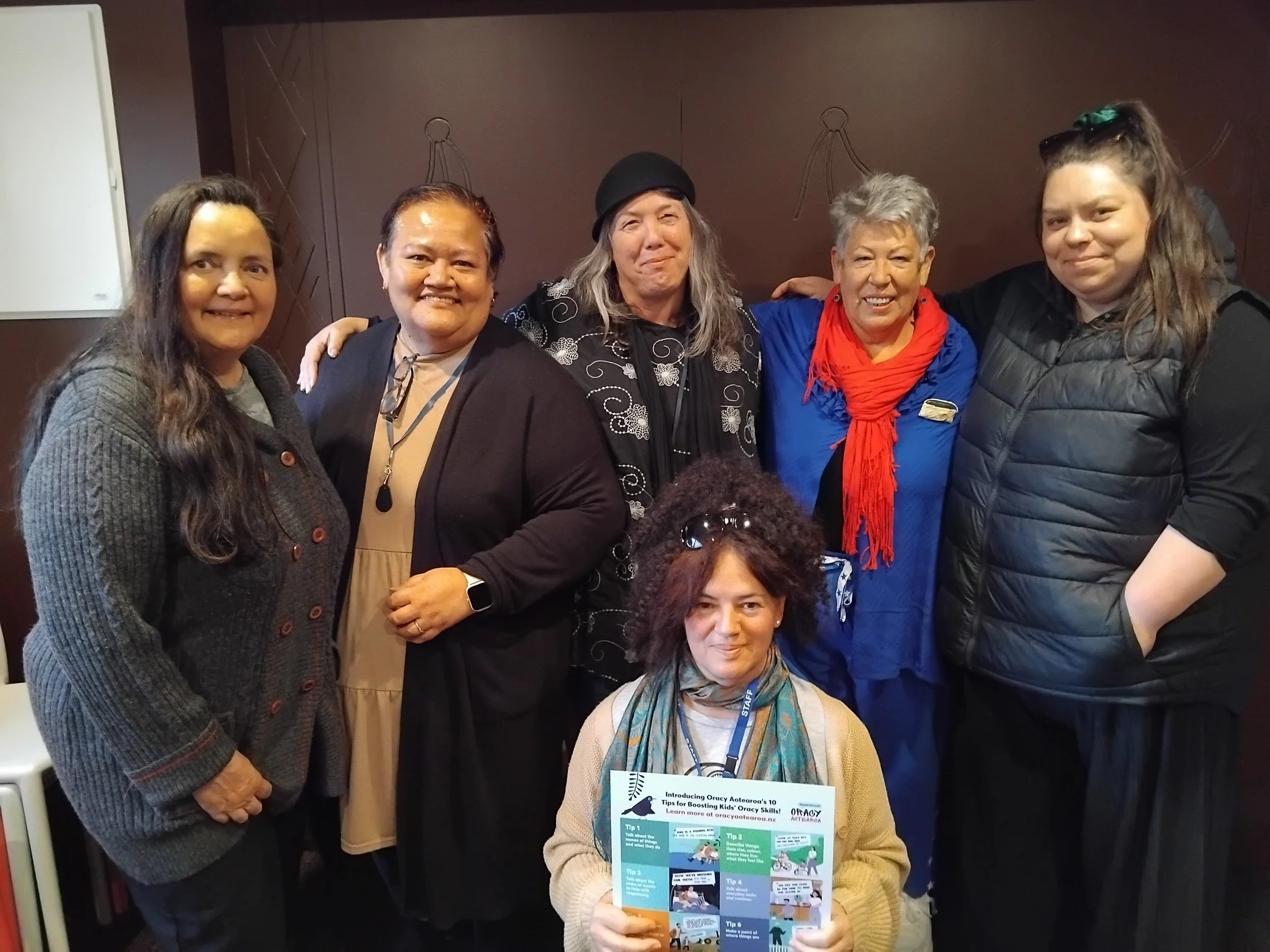
Tu Tama Wahine members
What This Journey Taught Us
Across every stop, one message came through clearly: our Ten Tips resources work. Their simplicity, practicality, and cultural adaptability make them easy to use in homes, ECEs, refuges, and community settings. The te reo versions were particularly valued, reinforcing the need to continue translating and developing resources.
The trip also confirmed that our strongest allies are those working with the most vulnerable tamariki and whānau. These communities see the consequences of poor oracy every day — and they are hungry for tools that can help break intergenerational cycles.
Training opportunities emerged repeatedly, especially in social service and ECE networks. Conferences such as the Teen Parent AGM now look like promising avenues for sharing Talking Hands and expanding our reach.
Karena concludes: “We felt that the connections made were very resonant and that we are on the way to establishing a mutually beneficial network.”
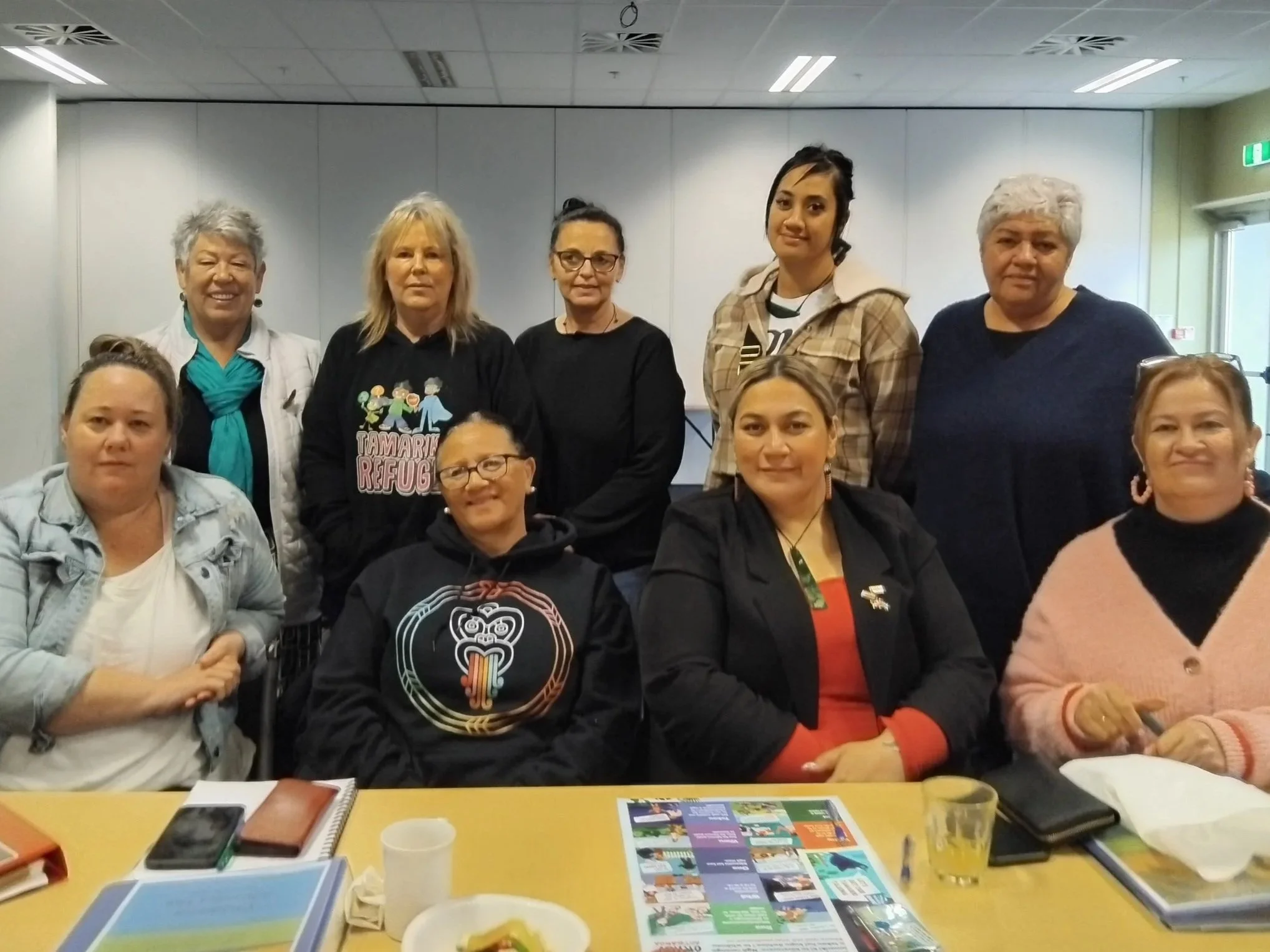
Women’s Refuge Group Hui, Tokoroa